Module · Energy
iniationEMS
Energy data at the plant. The energy part of iniationOS.
1 / 8
Module · Energy management · iniationEMS
Meters, inverters and storage rarely speak the same language. iniationEMS captures energy data at the plant and makes three things reliable: a load profile without penalty charges, power cost from weather and the exchange, and more site power despite a small grid connection point (NAP).
Discuss your energy setupCapture, organise and use energy data directly at the plant.
Module · Energy
Energy data at the plant. The energy part of iniationOS.
1 / 8
Meter readings alone do not change the bill. iniationEMS joins load profile, prices and storage so operations and management can decide.
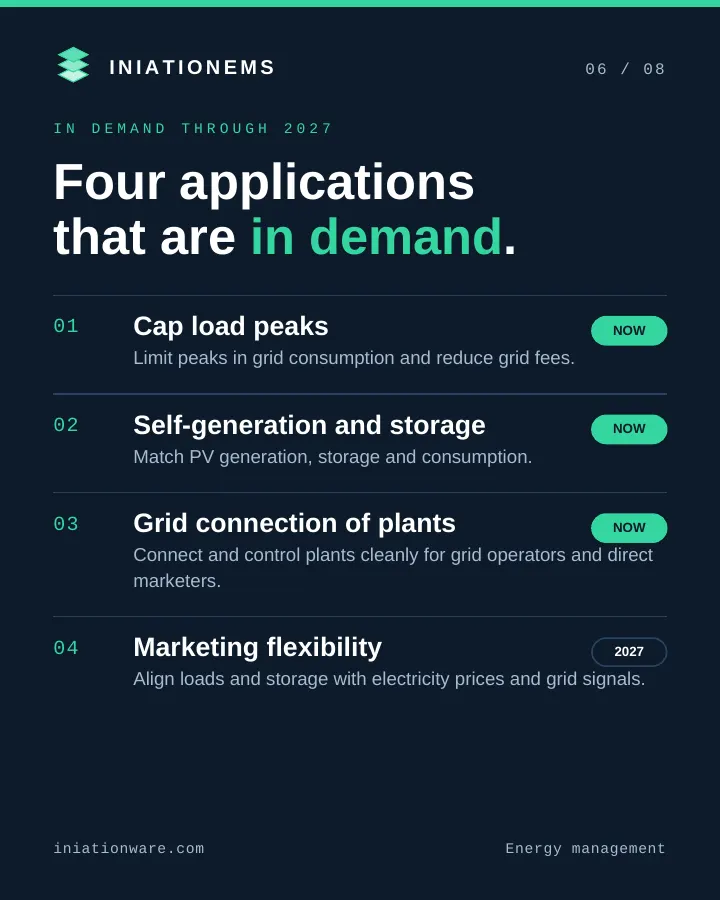
01 · Load profile and VDE
One peak can set the capacity charge for a year. If you do not know and steer the load profile, you pay afterwards. iniationEMS shows exceedances in time and staggers loads by priority and process state — within the expectations around metering and load profiles in the VDE context.
02 · Weather, exchange, offtake
Self-consumption, feed-in and grid offtake often run apart. iniationEMS joins weather forecast, exchange prices, feed-in and offtake on one timeline. You then steer when to store, when to buy and when feed-in beats local use.
03 · BESS and NAP
Often the grid connection point (NAP) is the limit, not ambition. With battery storage (BESS), charging infrastructure and time-shifted delivery you get peak power on site without upsizing the connection: charge when the NAP has headroom, deliver when production or mobility pulls.
Load profile, weather and the exchange have different formats, resolutions and latencies. If they are not brought onto the same timestamp and semantics, every schedule rests on estimates — and that is exactly when the peaks you pay for appear.
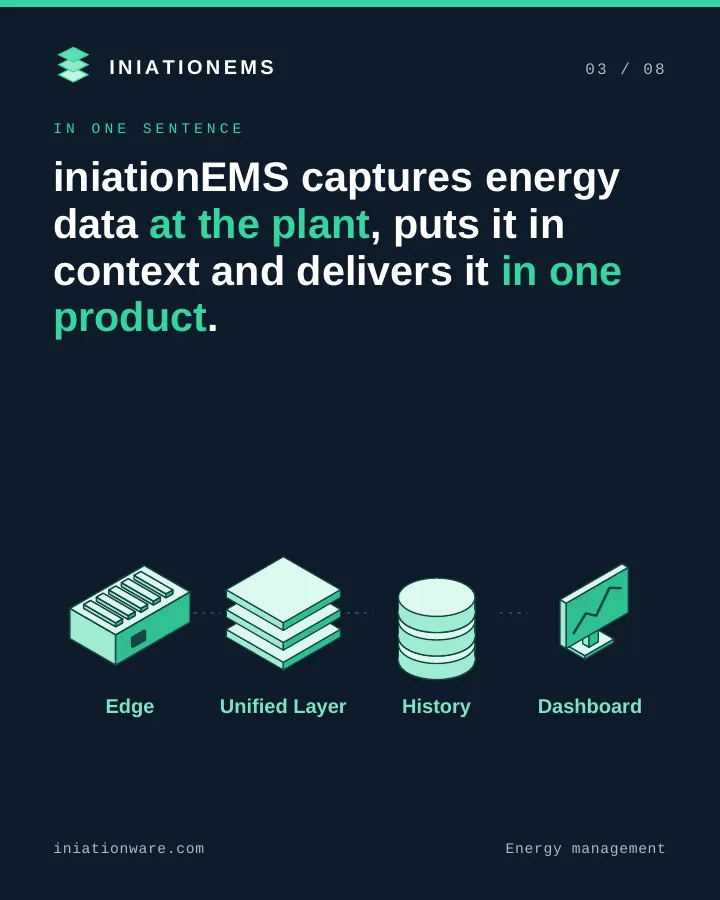
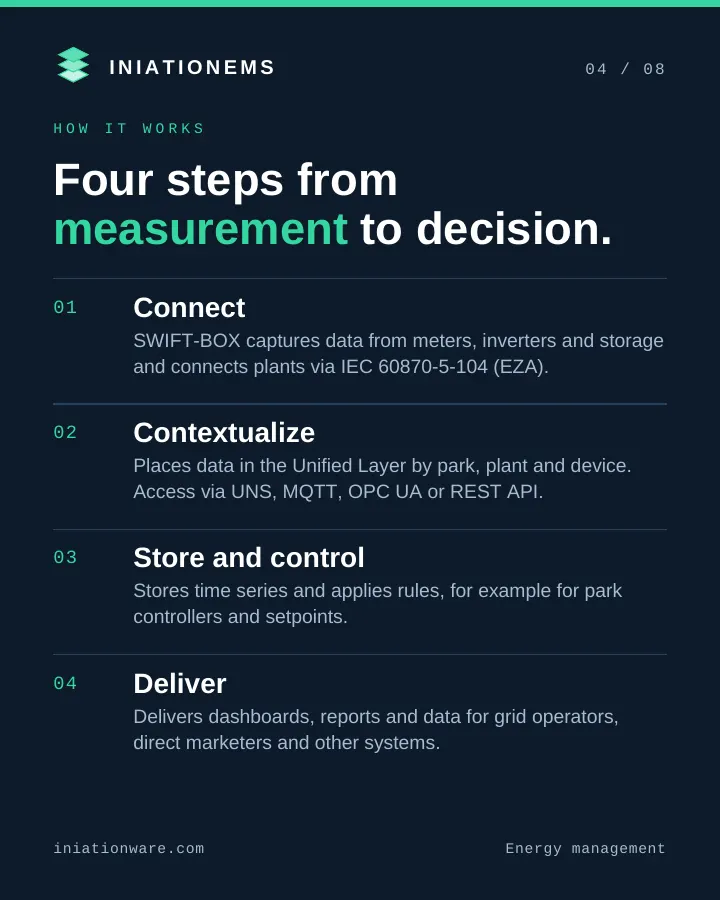
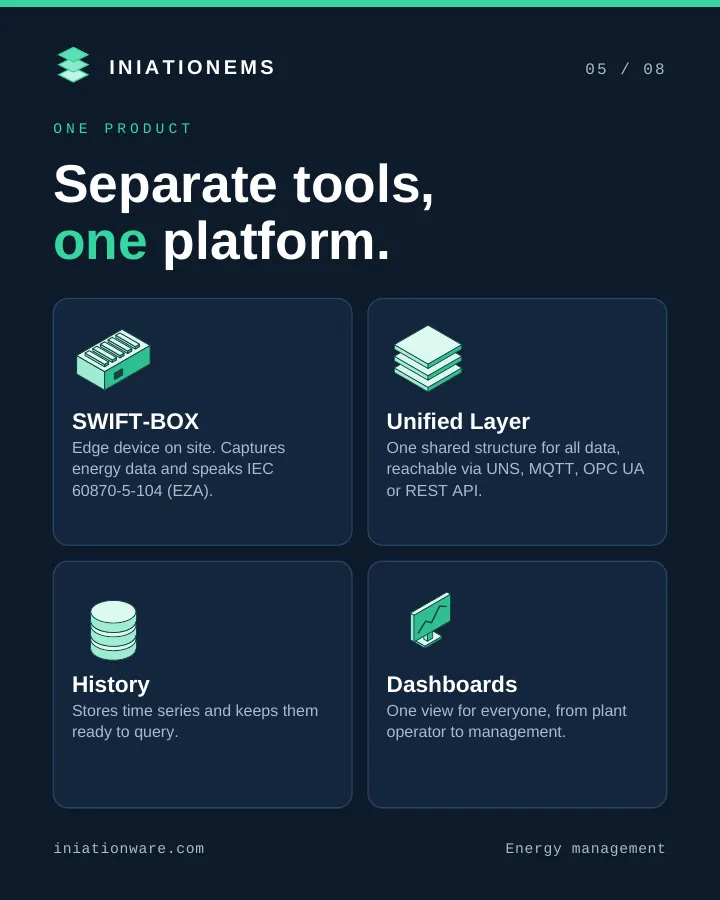
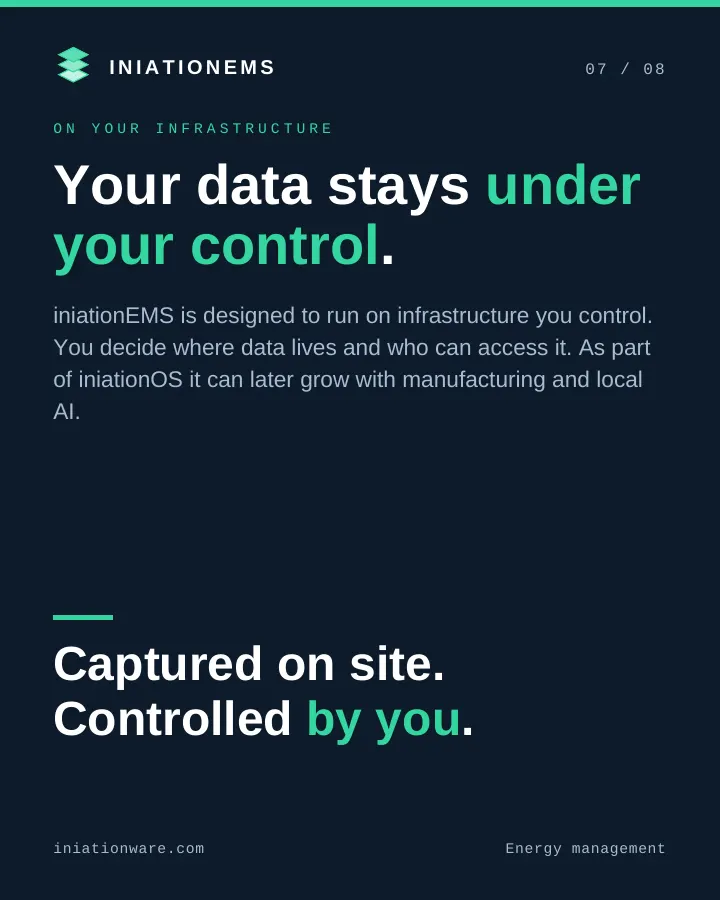
iniationEMS sits on the shared data foundation of iniationOS: provenance, timestamp, unit and asset context are described. SWIFT-BOX captures at the plant; rules and schedules run where the decision must take seconds.
Whether peaks, price optimisation or storage at the NAP come first is not on a product slide. We settle that against your load profile and connection limit.
Three themes plants and search systems ask most: load-profile penalties, best power price, and more site power despite a small grid connection.
Penalties and high capacity charges appear when peaks exceed the agreed or measured load profile. iniationEMS captures the load profile at the plant, shows exceedances early and steers loads by priority and process state before the peak is locked in. Metering and evidence stay traceable — including expectations around load profiles and metering in the VDE context. Without a reliable time series, any manual reaction comes too late.
The cheapest offtake is rarely the lowest exchange price alone. What matters is the combination: what will PV deliver given the weather forecast? What does offtake cost and what does feed-in earn in that interval? iniationEMS joins weather, exchange prices, feed-in and grid offtake on one timeline and feeds the schedule — store, consume or feed in. Rules of thumb cannot replace that; inconsistent timestamps cannot either.
When the grid connection point (NAP) is limited, you do not need a larger wished-for connection — you need time shifting. A battery energy storage system (BESS) charges when the NAP has headroom and delivers when production or charging infrastructure needs peaks. Mobility and machines then do not pull the NAP flat out at the same time. iniationEMS orchestrates load profile, state of charge and planned draws so you get more usable power on site without upsizing the connection.
iniationEMS is the energy part of iniationOS. For capture and load management on one line, SWIFT-BOX with EMS logic is often enough. Once several lines, order context or shared evidence are required, the shared data foundation carries the work. What comes first at your site is settled after looking at the load profile and the systems.
The current load profile or the annual bill with capacity figures, the size of the grid connection (NAP), existing generation and storage, and whether charging infrastructure is planned or already there. From that we see whether penalties, price optimisation or BESS at the connection is the strongest lever.
Case study · Metalworking
Meter and machine data joined to order data: unit costs including energy.
Learn more →Case study · Energy storage
Load profile, weather forecast and exchange prices aligned on one timeline.
Learn more →Platform
The shared data foundation EMS sits on.
Learn more →Edge
Capture and control at the cabinet.
Learn more →Case study
How energy data joins order data.
Learn more →Tell us your load profile, NAP and existing generation. You get a read on whether penalties, exchange scheduling or BESS is the strongest lever.
Discuss your energy setup